Ab Wheel and Back Muscles: What It Works (and Why)
Does an ab wheel work back muscles?
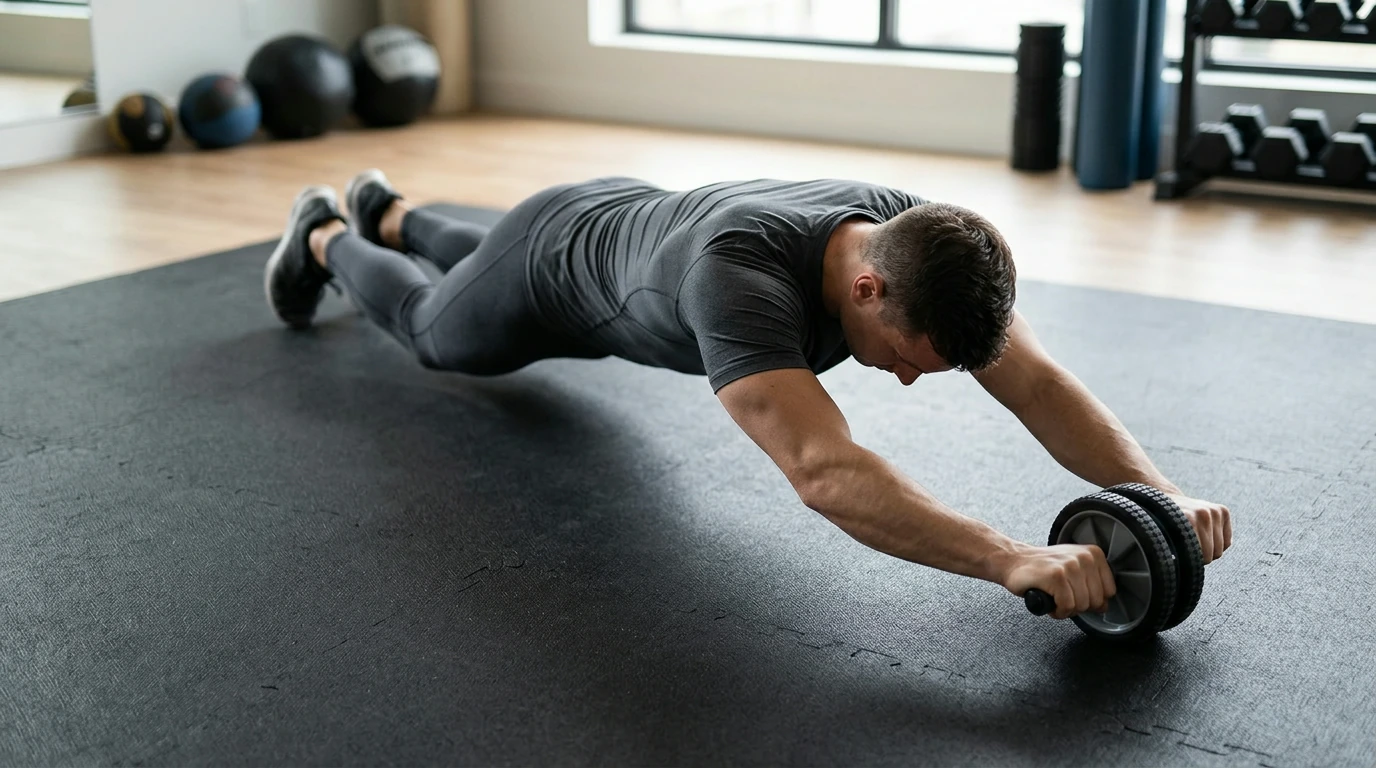
Yes—an ab wheel can work parts of your back, but not in the same way as rows or pull-ups. During an ab wheel rollout, your “core” isn’t just abs; it’s a full-body brace that includes the muscles along your spine (erector spinae) and the broad back muscle (latissimus dorsi) helping stabilize your torso and keep your shoulders packed as you extend.
How the back is involved in ab wheel rollouts
As you roll forward, your spine wants to extend and your ribs want to flare. Your deep core resists that, while your lower back muscles co-contract to keep your trunk rigid and your pelvis from tipping. At the same time, your lats engage to control the forward reach and support shoulder position—especially if you keep your arms “long,” your shoulder blades slightly protracted, and your ribs down.
Which back muscles feel it most?
Most people notice their lats, mid-back stabilizers around the shoulder blades, and erector spinae working isometrically. If your form breaks (arching hard through the lower back), the low back may feel more strain than productive training.
Will it build back size and strength?
It can improve back endurance and core-linked stability, but it’s not a primary hypertrophy tool for the back. Think of the ab wheel as a core anti-extension exercise that recruits the back to keep you safe and strong, not as a substitute for pulling movements.
How to target the back safely while using an ab wheel
Start from the knees, tuck the pelvis slightly, and keep a neutral spine. Roll out only as far as you can maintain “ribs down” with no sagging. If you want a structured approach to form, progressions, and a simple schedule, follow the detailed guide here: ab wheel training form, progressions, and 3-day plan.
FAQ
What muscles does the ab wheel work besides abs?
It heavily trains the entire core, plus the lats, shoulders, chest, and glutes as stabilizers. The harder the rollout variation, the more total-body tension you’ll need.








Leave a comment