Cow & Duck Plush Chew Toy for Dogs and Cats
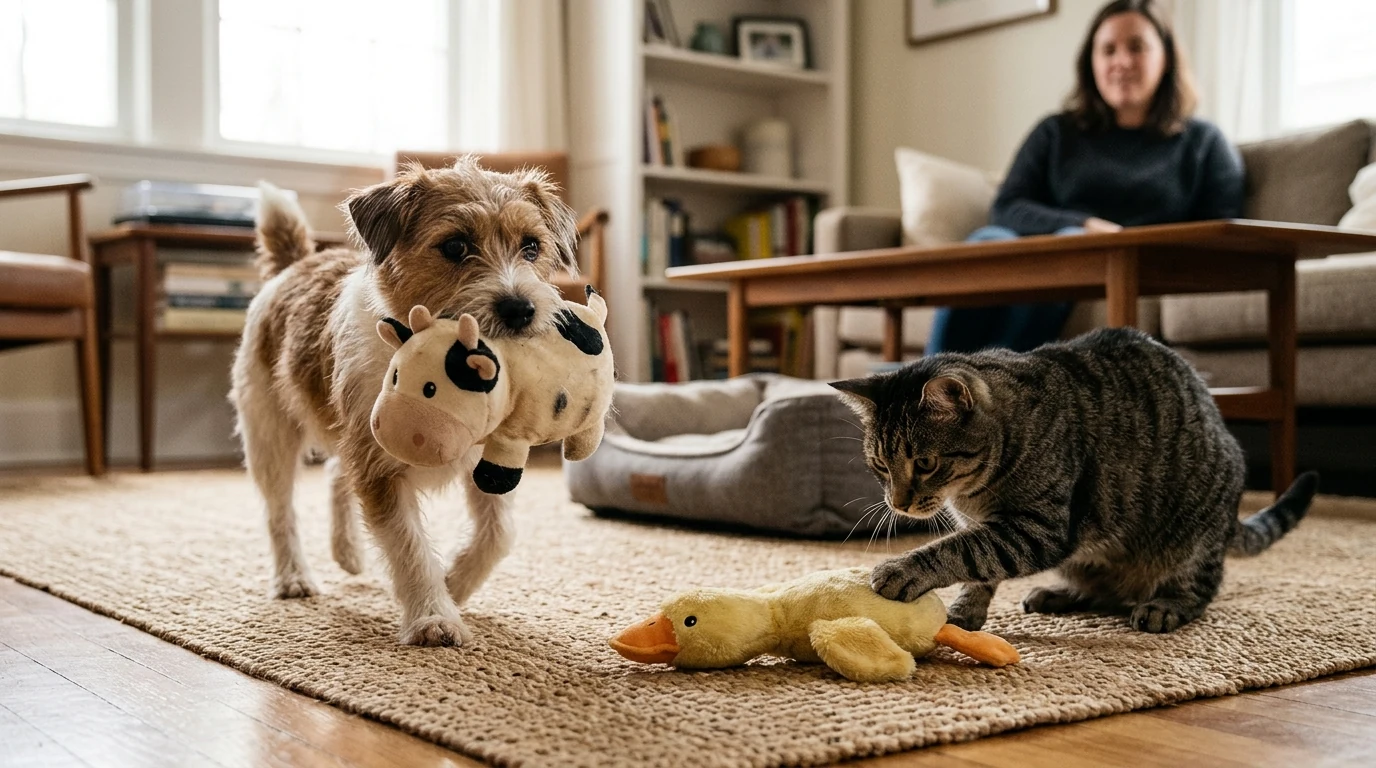
Interactive Plush Chew Toy for Dogs and Cats – Cow & Duck Shapes
Soft, playful, and designed to keep pets busy, this plush chew toy in cow and duck shapes adds variety to daily enrichment for both dogs and cats. It’s a simple way to support solo play, reduce boredom, and encourage gentle chewing and pouncing—especially for pets that prefer plush textures over hard toys. For more guidance, see 12 Dog Toys That Are Nearly Indestructible – Good Housekeeping.
What makes this plush toy engaging
Some pets stay interested longer when a toy feels familiar (soft and cuddly) but still looks “new” enough to trigger curiosity. The cow and duck character styles help create that novelty, while the plush exterior keeps the experience inviting for pets that like to carry toys from room to room.
- Cow and duck character shapes add novelty and encourage curiosity during play
- Plush exterior is appealing for pets that enjoy carrying, cuddling, or gentle chewing
- Works for multiple play styles: chasing, batting, tugging (light), and comfort-carrying
- A budget-friendly add-on toy for rotation, helping keep playtime fresh
Best uses for dogs and cats
Plush toys can be surprisingly versatile when matched to the right play style. For many households, they’re the “quiet hour” option that keeps paws and mouths busy without the clatter of hard plastic.
- For dogs: indoor fetch (short tosses), light tug, comfort toy in crate or bed
- For cats: stalking, bunny-kicking, batting, and carrying around the home
- Helpful during quiet hours: gives an outlet for chewing and mouthing when outdoor activity is limited
- Ideal as a “rotation toy” swapped in and out to maintain interest
For safety basics, it’s worth following established toy guidance such as the ASPCA’s pet toy safety tips and the AKC’s advice on choosing safe dog toys.
Choosing between the cow and duck shapes
Both shapes are meant for interactive, gentle play—but pets often develop strong preferences based on how a toy feels in the mouth or under the paws. If you’re deciding which to start with, focus on how your pet naturally plays: hugging and holding, quick swats, or carrying.
- Pick the shape that matches the pet’s play style: some pets prefer rounded bodies (easy to grab) while others like longer shapes (easy to kick or carry)
- Use different shapes for multi-pet homes to reduce toy-guarding and mix-up conflicts
- Rotate shapes across the week to prevent the toy from becoming background clutter
Quick comparison: cow vs. duck for common play habits
| Play habit | Cow shape tends to suit | Duck shape tends to suit |
|---|---|---|
| Carrying around the house | Pets that like a plush “buddy” feel | Pets that like a lighter, easy-grip shape |
| Pouncing and batting | Cats that pin and hug toys | Cats that like quick swats and tosses |
| Gentle chewing | Dogs that mouth and settle | Dogs that alternate chewing and shaking (lightly) |
| Multi-pet rotation | Distinct look for easy ID | Distinct look for easy ID |
Safety and durability tips for plush chew toys
Plush toys are best treated as “supervised fun,” especially during the first few play sessions. Every pet chews differently, and a toy that’s perfect for one dog can be shredded quickly by another. General pet safety guidance from the AVMA reinforces the value of monitoring and removing hazards early.
- Supervise early sessions to see if the pet tries to tear seams or remove small parts
- Choose plush toys for gentle chewers; heavy chewers may destroy plush quickly and risk ingesting stuffing
- Inspect often: retire the toy if seams open, stuffing becomes exposed, or pieces can be swallowed
- Match play to the toy: keep tug light and avoid leaving it with pets that shred fabric
- If a pet has a history of swallowing non-food items, consult a veterinarian about safer toy options
Care and cleaning
Plush toys tend to pick up saliva and dust, especially if they’re used as “comfort carry” items. A simple routine helps keep them fresher and can extend the life of the seams and fabric.
- Spot clean routinely to reduce odors and buildup from saliva and dust
- If laundering is needed, use a gentle cycle and air dry when possible to help preserve seams (follow any care instructions included with the product)
- Keep a small toy rotation: one in use, one being cleaned, one stored—this extends toy life and keeps interest high
Who this toy is a good fit for
This style of plush chew toy is a practical choice for households that want simple, low-noise enrichment without committing to bulky or expensive gear. It’s also a nice “fresh toy” option for pets that lose interest when the same items stay on the floor all week.
- Dogs and cats that enjoy plush textures, carrying toys, or gentle chewing
- Puppies and kittens learning appropriate toy play (with supervision)
- Indoor pets that benefit from low-noise enrichment
- Pet parents looking for an inexpensive, easy add-on for toy variety
Shop in-stock picks
- Interactive Plush Chew Toy for Dogs and Cats – Cow & Duck Shapes
- Adidas Women’s White Faux Leather Sneakers
- Stainless Steel Serving Set
- Abdominal Wheel for Strengthening Muscles
FAQ
Is a plush chew toy safe for aggressive chewers?
Plush toys are usually best for gentle chewers. Aggressive chewers can tear fabric quickly and may swallow stuffing or small pieces, so supervise play, inspect often, and switch to tougher options if shredding starts.
Can cats use this plush toy too?
Yes, many cats enjoy plush toys for batting, pouncing, bunny-kicking, and carrying. Supervise at first and remove the toy if your cat rips seams open or starts pulling out stuffing; rotating toys can also keep interest high.
How often should a plush pet toy be replaced?
Replace it when seams loosen, stuffing becomes exposed, parts go missing, or your pet starts chewing off and ingesting pieces. Frequency depends on your pet’s chewing intensity and how often the toy is used.









Leave a comment