Colorful Metal Stitch Markers for Smoother Knitting
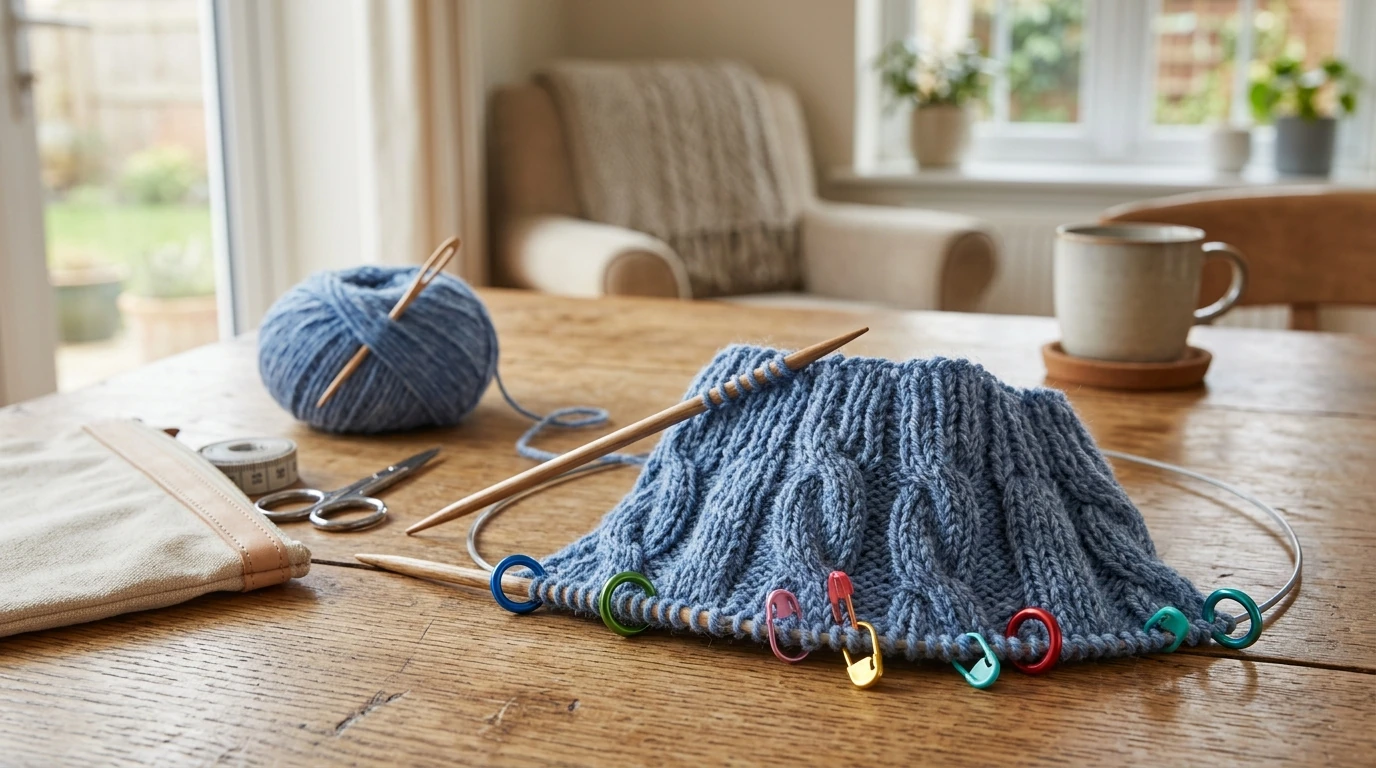
Colorful Metal Knitting Stitch Markers: Small Tools That Keep Every Row on Track
Stitch markers are the quiet problem-solvers of knitting: they help track repeats, highlight increases and decreases, and mark beginnings without breaking rhythm. Metal markers add durability and a smooth glide, while bright colors make pattern checkpoints easier to spot at a glance.
What stitch markers do (and why metal is a favorite)
Whether a pattern is simple stockinette in the round or a chart packed with cables and lace, stitch markers create reliable “checkpoints” that keep the work organized.
- Mark the beginning of a round for circular knitting and help prevent drifting stitch counts.
- Track pattern repeats (cables, lace, colorwork) by separating motif sections.
- Flag increase/decrease points so shaping stays consistent over long projects.
- Metal rings tend to slide smoothly on needles and hold their shape better than many soft plastics.
- Colorful finishes make it easier to scan work quickly and catch mistakes early.
For yarn-specific planning—especially when changing yarn weights or needle sizes—keeping standards in mind can help you match marker size to your tools. The Craft Yarn Council’s Yarn Weight Standards is a helpful reference point when moving between laceweight, worsted, and bulky projects.
When to use stitch markers during a project
Markers aren’t only for the first round. They’re most useful when placed proactively, before confusion starts.
- At cast-on: place markers between repeat sections to avoid recounting the entire row.
- During shaping: put markers one stitch before/after increase lines to confirm placement.
- In lace: mark yarn-over zones or the center stitch of a motif to stay oriented.
- In sleeves and socks: mark the start of round and separate heel/instep sections.
- For troubleshooting: add a temporary marker at the point an error occurred to track back confidently.
A practical habit is to assign meaning to color (for example, one color for the beginning of the round and another for repeat boundaries). That way, a quick glance tells you what kind of checkpoint you’re approaching—no rereading required.
Snap-on vs ring markers: choosing the right style for the job
Not all stitch markers behave the same. A ring marker “travels” with the stitches on the needle, while a locking/snap-on marker attaches directly to fabric. Each has a place in a well-rounded toolkit.
- Ring markers (closed circles) are ideal for needles and for sliding along as stitches move.
- Locking or snap-on markers can attach to fabric (useful for counting rows, edges, or crochet), but may snag delicate yarn if edges are rough.
- For fast knitters, ring markers reduce interruptions because they move with the stitches naturally.
- For row counting on a shawl or sweater body, locking markers can be repositioned without ripping back.
| Marker type | Best for | Watch-outs |
|---|---|---|
| Closed ring (metal) | Beginning of round, repeat sections, shaping lines | Must fit needle size; can’t clip onto fabric |
| Locking/snap-on | Row counting, attaching to edges, crochet-friendly use | May snag fuzzier yarns; moving it can stretch stitches |
| Split ring | Temporary placement on fabric without opening a clasp | Can catch fine fibers if pulled quickly |
Fit and comfort: getting the size right
The best marker is the one you forget is there—until you need it. Size and finish determine whether a marker glides or interrupts.
- A marker should slide easily on the needle without forcing stitches to bunch up.
- Too-small markers can distort stitches and slow down knitting; too-large markers can flop around and distract.
- For thick yarns and larger needles, choose markers with a wider internal diameter.
- For laceweight and smaller needles, lightweight, smooth-edged markers help prevent snagging.
- If working magic loop or traveling loop, markers that glide cleanly reduce interruptions at the cable junction.
If you’re unsure where to start, match marker size to the needle you reach for most often. Then add a smaller set for fine-gauge projects and a larger set for chunky hats, cowls, and quick gifts.
Care tips for colorful metal markers
For knit items that need special handling after finishing, follow fiber-appropriate care guidance—especially for wool. The Woolmark Company’s wool care instructions are a solid baseline for washing and drying practices that protect stitch definition (and the hard work those markers helped you maintain).
Product spotlight: Colorful Metal Knitting Stitch Markers
If the goal is smoother knitting with fewer recounts, Colorful Metal Knitting Stitch Markers are a simple upgrade with day-to-day impact. The bright colors are easy to see against most yarns, and the metal construction is designed to hold shape and move cleanly along the needle.
| Item | Details |
|---|---|
| Name | Colorful Metal Knitting Stitch Markers |
| Price | 6.01 USD |
| Availability | In stock |
A couple of other in-stock finds
If you’re bundling essentials across hobbies and home, these are also currently available: Stainless Steel Serving Set and Abdominal Wheel for Strengthening Muscles.
FAQ
Do metal stitch markers snag yarn?
Most metal stitch markers glide smoothly, but snagging can happen if a marker has a burr, rough seam, or chipped finish. If you notice catching, inspect the edge and replace any marker that feels sharp—especially when working with delicate or fuzzy yarns.
How many stitch markers are needed for a project?
Many projects only need 1 marker for the beginning of the round, while repeat-heavy patterns often use 4–8 markers to separate motifs. Complex lace or cable layouts can use a dozen or more, and it’s smart to keep extras on hand for troubleshooting and holding places while fixing mistakes.
Can stitch markers be used for crochet too?
Yes, but the style matters: locking or split markers are usually the easiest for crochet because they attach directly to stitches. Closed ring markers are less convenient, though they can still work in some cases by slipping them onto the hook when appropriate.









Leave a comment