Organize Without Bins: Minimalist Storage That Stays Tidy
Clutter-Free Living Without Bins: Minimalist Storage That Actually Stays Tidy
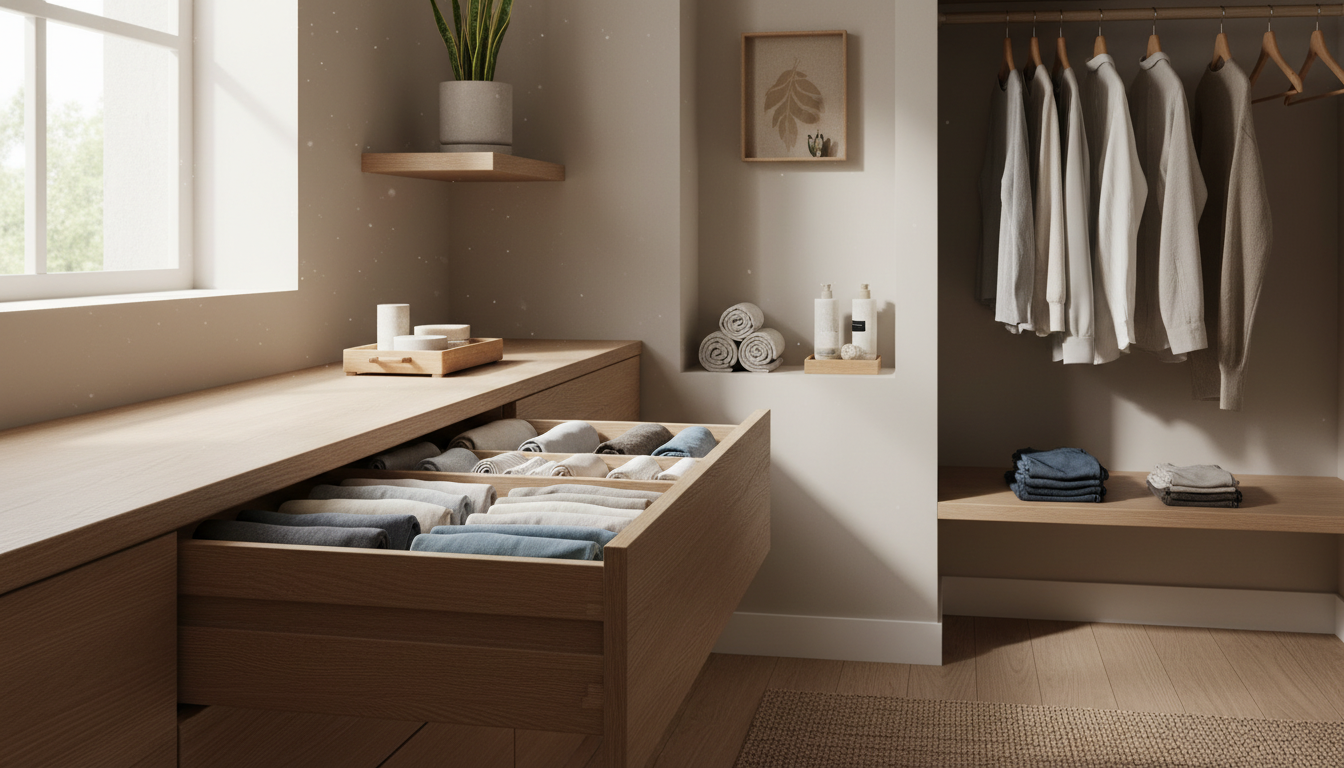
A calm home doesn’t require buying stacks of matching containers. Bin-free organization focuses on reducing volume, making everyday items visible and easy to return, and using the space you already have with a few smart, sustainable adjustments. This approach works especially well for small homes, shared spaces, and anyone tired of “organizing” that turns into hiding clutter.
What “Organize Without Bins” Really Means
Bin-free organization isn’t “no storage.” It’s storage that relies on clear homes, simple boundaries, and fewer items—so putting things away feels automatic instead of like a weekend project.
- Prioritize fewer items over better containers: reducing duplicates and “maybe someday” belongings creates instant breathing room.
- Design for return, not perfection: the best system is the one that makes it effortless to put things back in under 30 seconds.
- Use natural boundaries instead of containers: shelves, drawer dividers you already own, bookends, trays, hooks, and vertical stacking.
- Keep categories broad enough to maintain: too many micro-categories increase decision fatigue and lead to pile-ups.
- Make the most-used items the easiest to access: daily tools live at hand; backups and seasonal items move higher or farther.
Think “zones and edges,” not “bins and lids.” A tray can corral daily essentials on a console table; a row on a shelf can become the “coffee” zone; two hooks can eliminate the chair-pile overnight.
The Bin-Free Decluttering Order That Prevents Backsliding
The fastest way to stay tidy is to declutter in an order that builds momentum and prevents the same piles from re-forming.
- Start with obvious exits: broken items, expired products, missing-pair items, and anything kept only out of guilt.
- Reduce duplicates by setting a “working set”: keep what fits your real routines (for example, two water bottles per person, one go-to pan per size).
- Clear flat surfaces before drawers: counters and tables are visual clutter magnets; freeing them creates immediate momentum.
- Decide a home for each category before moving on: avoid the “wandering item” problem that creates new piles later.
- Finish with a 10-minute reset habit: a short daily sweep beats occasional marathon cleanups.
Bin-Free Organization Moves by Room
| Room | Common clutter | Bin-free fix | Maintenance rule |
|---|---|---|---|
| Entryway | Shoes, keys, mail | One hook per person + a single bowl/tray for keys + immediate mail sort | Nothing lands on the floor; paper is handled once |
| Kitchen | Overflow gadgets, pantry chaos | Keep only daily tools at counter; store like-with-like on shelves; label shelf zones (not bins) | One-in-one-out for tools and spices |
| Bathroom | Samples, duplicates, backups | Limit to one backup per essential; use drawer zones and vertical standing items | Restock only when a product is halfway |
| Bedroom | Clothes and “catch-all” surfaces | Capsule-style daily wardrobe; clear nightstand except essentials | Weekly 5-minute clothing reset |
| Living room | Cables, remotes, papers | Cable clips + one designated charging spot + paper inbox folder | End-of-day surface sweep |
Minimalist Storage Tools That Aren’t “More Stuff”
Smart Spaces: Making Small Homes Feel Bigger
One practical example: shoes. If pairs constantly drift into the living room, reduce the “active” shoe lineup at the door. A simple, limited row encourages decisions and prevents overflow—especially helpful if you rotate a couple favorites like Adidas Women’s White Faux Leather Sneakers instead of keeping every pair accessible.
Sustainable Decluttering: What to Do With What Leaves
- Donate responsibly: prioritize local charities that accept specific categories and follow their intake rules (see Goodwill’s donation guidelines for common examples).
- Recycle correctly: separate e-waste, batteries, and textiles; use municipal drop-offs or retailer take-back programs where available (the U.S. EPA’s Reduce, Reuse, Recycle resources are a solid starting point).
- Sell selectively: choose a time limit (for example, 14 days). If it doesn’t sell, donate to prevent items lingering in limbo.
- Avoid replacing clutter with new clutter: pause before buying “organizing” products; fix the volume problem first.
- Build a sustainable intake rule: one-in-one-out, a monthly no-buy week, or a defined storage limit for each category.
For deeper organizing fundamentals and maintenance habits, guidance from professional organizers can help set realistic expectations (see NAPO’s organizing basics).
A Practical Plan for Keeping It Clutter-Free
If you’re tired of gadget clutter in the kitchen, choose multi-use items and keep only what earns its space. A streamlined tool like a Stainless Steel Serving Set can replace mismatched, rarely used servers—especially when you store it upright in a drawer zone so it’s visible at a glance.
For hobby and fitness gear, treat it like any other category: define one home and one limit. An Abdominal Wheel for Strengthening Muscles is compact enough to live on a single designated shelf or hook; when it has a clear parking spot, it won’t migrate to the middle of the room.
Practical eBook Guide: Organize Without Bins
For a room-by-room, repeatable system, Clutter-Free Living: Organize Without Bins – Practical eBook Guide walks through a bin-free approach that prioritizes visibility, easy reset habits, and less waste.
FAQ
Can a home stay organized without using bins at all?
Yes—by keeping fewer items, assigning clear category “homes,” and using simple boundaries like shelves, hooks, and upright filing. The key is making “put it back” easier than setting it down.
What if other people in the home don’t follow the system?
Simplify categories, reduce steps to put things away, and label zones on shelves or inside drawers. A shared daily 10-minute reset makes the system realistic for everyone.
How can decluttering be more sustainable?
Donate to places that actually accept your items, recycle e-waste and textiles correctly, and sell with a firm time limit so items don’t linger. Prevent re-cluttering with clear storage limits and more mindful purchasing rules.










Leave a comment