Hidden Space Ideas for Small Homes and Apartments
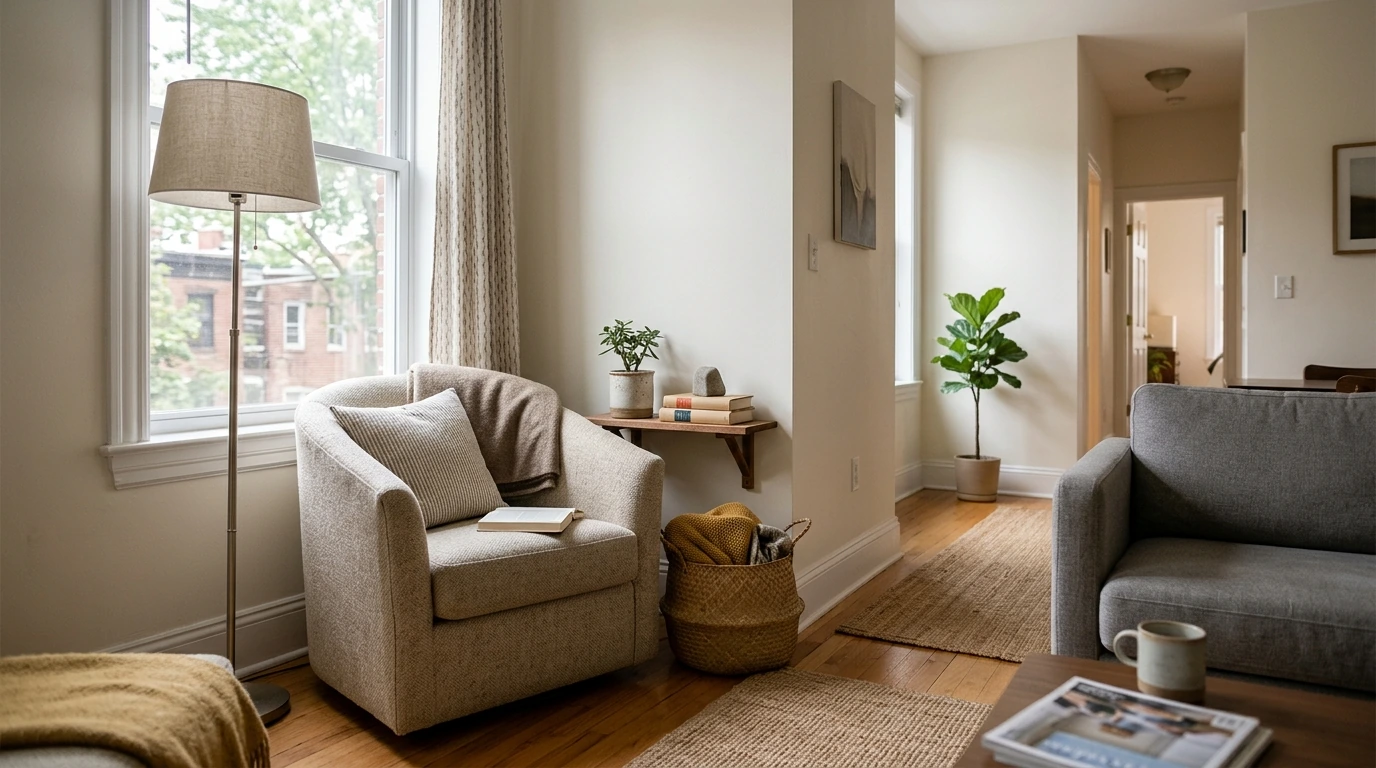
A small room often has more possibilities than its floor plan suggests. An empty corner, a narrow gap beside a sofa, or the space under a table can become useful without requiring a full redesign. The key is to give each spot a clear job and leave enough room for everyday movement.
Our digital eBook, Creative Ways to Maximize Hidden Spaces at Home, offers a resource for exploring small-home, apartment styling, and corner design ideas. Start with the spaces you already have, then choose an approach that fits the way you live.
Find the Spaces You Can Put to Work
Take a slow walk through your room and look beyond the obvious open floor area. You might notice a bare corner behind a door, an unused stretch of wall, or a narrow space between a sofa and a window. Areas under stairs or tables can also offer opportunities for storage or display.
Before bringing anything home, measure the height, width, and depth of the spot. Note nearby outlets if you want to add a lamp or workspace, and account for doors, drawers, and windows that need to open. A piece that fits the measurements of a gap may still be inconvenient if you cannot reach it comfortably.
Pay attention to walking routes, too. Leave enough space to move naturally around furniture rather than squeezing through a newly furnished corner. If a space is awkward to access, it may be better suited to an occasional display than to items you use every day.
Give an Awkward Corner a Purpose
Choosing one purpose helps a small space feel intentional. A living room corner could become a reading nook with a compact chair and a light. If you work from home, a narrow desk may give you a dedicated place for your laptop without taking over the room. A simple shelf or small surface can instead showcase a few favorite objects.
Let your routine guide the choice. If you already read on the sofa, you might get more use from slim storage than a second seating area. If you need a work surface only occasionally, consider a compact setup that does not block access to the rest of the room.
Ideas for Common Overlooked Spaces
| Space | Possible use | Before you begin |
|---|---|---|
| Empty living room corner | Reading nook | Check clearance for a chair and light |
| Narrow gap beside a sofa | Slim storage | Measure width and access |
| Unused wall area | Vertical display | Check wall suitability and fixing requirements |
| Space under a table | Basket storage | Leave room for legs and movement |
Try placing a piece of paper or painter’s tape on the floor to represent the footprint of a proposed item. Live with the outline for a day and notice whether it interrupts your normal route. This simple test can help you decide whether the idea works before you commit to it.
Style Small Spaces Without Adding Clutter
A limited color palette can connect a newly useful corner to the rest of your room. Choose a few colors already present in your furniture or textiles, then add one or two accents for personality. Practical pieces can contribute to the look: a basket can hold throws, while a small tray can gather loose items on a shelf.
Use vertical space thoughtfully rather than filling every available inch. A short row of shelves or a wall-mounted display can free up floor space, but keep frequently used items within easy reach. Leave some open surface around decorative objects so the arrangement does not feel crowded.
In a dining area, useful objects can double as a display. Our Stainless Steel Serving Set could have a home on an accessible shelf or in a nearby cabinet, keeping it handy for meals without taking up table space. Choose a location where it is easy to retrieve and put away.
Keep exits and circulation paths clear, including the route to doors. The U.S. Fire Administration’s home fire safety guidance is a useful resource when planning safe routes through your home. If you rent, review your lease before drilling or making other permanent changes, and use wall fixings appropriate for the wall and the weight they will support.
Explore More Ideas with the eBook
Our team selected Creative Ways to Maximize Hidden Spaces at Home for readers looking for inspiration for small homes, apartment styling, and corner design. It is a home decor digital download, so you can explore the ideas without adding another physical item to your shelves.
The current listed price is $14.99 USD, subject to change. Browse the product page and consider which ideas fit your room’s dimensions, your daily routine, and the amount of space you want to keep open. A useful corner does not need to do everything; often, one well-chosen purpose is enough.
FAQ
What can I do with an empty corner in a small apartment?
Consider a reading nook, compact workspace, or decorative display. Choose the option that fits the available space and supports your daily routine.
How do I make hidden spaces useful without making a room feel crowded?
Measure first and give the space one clear purpose. Choose appropriately sized storage and keep walkways and exits clear.
Is this eBook a physical book?
No. Creative Ways to Maximize Hidden Spaces at Home is listed as a digital download.










Leave a comment