Light Exposure for Daily Energy: A Practical Blueprint

Light is a simple part of your surroundings that can help shape how you feel throughout the day. A little more daylight after waking and a dimmer setting near bedtime can support alertness and a consistent sleep-wake schedule, alongside other healthy habits.
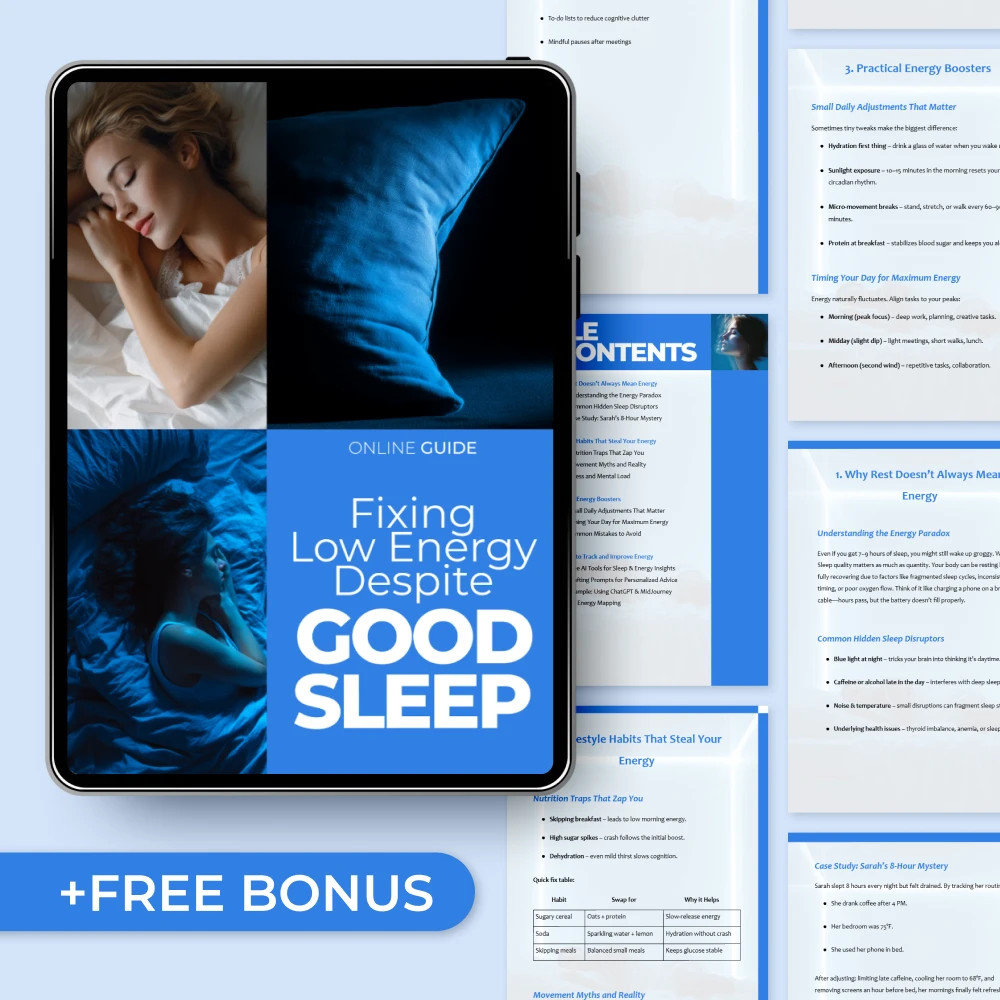
If you want a more intentional approach, our Light Exposure for Daily Energy Blueprint is a $12.99 option for exploring daily light habits. Start with the circumstances you already have, then make changes that feel practical enough to repeat.
Why Light Matters Throughout the Day
Your body has an internal clock that helps coordinate daily patterns, including when you feel awake and when you feel ready for sleep. Light is an important cue for that clock. Exposure during the day helps signal that it is time to be active, while a darker environment at night supports the transition toward rest.
The National Institute of General Medical Sciences explains how light and darkness influence circadian rhythms. These rhythms respond to your environment, so the timing of light exposure can matter as well as the amount.
Light is not a guaranteed fix for low energy. How you feel also depends on sleep quality, health, activity, stress, medications, and other factors. Think of light as one useful part of a broader routine, not a replacement for rest or care when you need it.
Build a Light-Aware Daily Routine
When practical, spend some time outdoors after waking. You might step outside with your morning drink, walk to a nearby stop, or take a short stroll before beginning work. There is no single duration that fits everyone, so choose an approach that works with your schedule and circumstances.
Keep looking for opportunities to get daylight later in the day, too. A break outside, a walk between appointments, or an outdoor lunch can make light exposure part of an existing routine. If you work indoors, a break near a window can be a practical option when going outside is not possible.
As bedtime approaches, consider dimming household lights and reducing exposure to bright screens. You do not need to make every evening identical; the goal is to create a noticeable shift between your active daytime environment and a calmer setting for sleep.
| Time | Practical approach | Purpose |
|---|---|---|
| Morning | Spend time outdoors when practical | Provide a daytime signal after waking |
| Daytime | Seek daylight during breaks | Support a clear daytime routine |
| Evening | Dim lights as bedtime approaches | Reduce bright-light exposure before sleep |
Plan for Real-World Days
Clouds, indoor work, and changing schedules can make a routine less predictable. On a cloudy day, an outdoor break can still give you exposure to daylight. If you cannot step outside, sit near a window when you can, or look for another opportunity later. These choices do not have to be identical to an outdoor morning routine to be useful ways of making daylight more accessible.
Never look directly at the sun. Use appropriate sun protection, and follow your healthcare professional’s advice if you have a condition or take medication that makes you sensitive to light. If your work schedule changes, adjust your routine around your actual waking and sleep times rather than forcing it to match someone else’s day.
Where the Blueprint Fits
Our Light Exposure for Daily Energy Blueprint is for readers interested in a more structured approach to daily light habits. It is listed at $12.99 and is in stock. You can use it as a starting point for considering how light fits into your day, while keeping your own schedule and health needs in mind.
Our team also knows that a routine often starts with a practical cue. If an outdoor walk is the habit you want to pair with daylight, our Adidas Women’s White Faux Leather Sneakers are another in-stock option to consider. Choose footwear that feels comfortable for your activity and the conditions outside.
Neither a product nor a perfect schedule is required to begin. A few repeatable choices can help you pay attention to when you encounter daylight and how your evening environment changes.
Make the Routine Work for You
Try attaching a daylight break to something you already do. Step outdoors after breakfast, take a walk during lunch, or pause outside after dropping someone off. An existing habit can serve as a reminder without adding another complicated task to your day.
Be flexible when work, family commitments, weather, or your individual needs change the plan. If mornings are crowded, look for daylight during a later break. If evenings are busy, start by dimming one room where you spend time before bed. Small adjustments are easier to maintain when they fit the life you actually have.
Remember that light is only one piece of the picture. The CDC’s guidance on sleep offers information about sleep needs and habits that can support rest. If fatigue persists, sleep difficulties interfere with daily life, or you have concerns about light sensitivity, speak with a healthcare professional.
FAQ
Can morning light help with daytime alertness?
Morning light can help reinforce your body’s daytime signal and support alertness. Results vary, and getting adequate sleep remains important.
What if I cannot get outside in the morning?
Seek daylight later in the day when practical, and aim for a consistent sleep-wake routine. A later break may be useful, though it does not necessarily have the same effects as morning light.
Is the Light Exposure for Daily Energy Blueprint a substitute for medical advice?
No. If you have ongoing fatigue, sleep difficulties, or light sensitivity, seek advice from a healthcare professional.








Leave a comment