A Room of Your Own: Create Space for What Matters
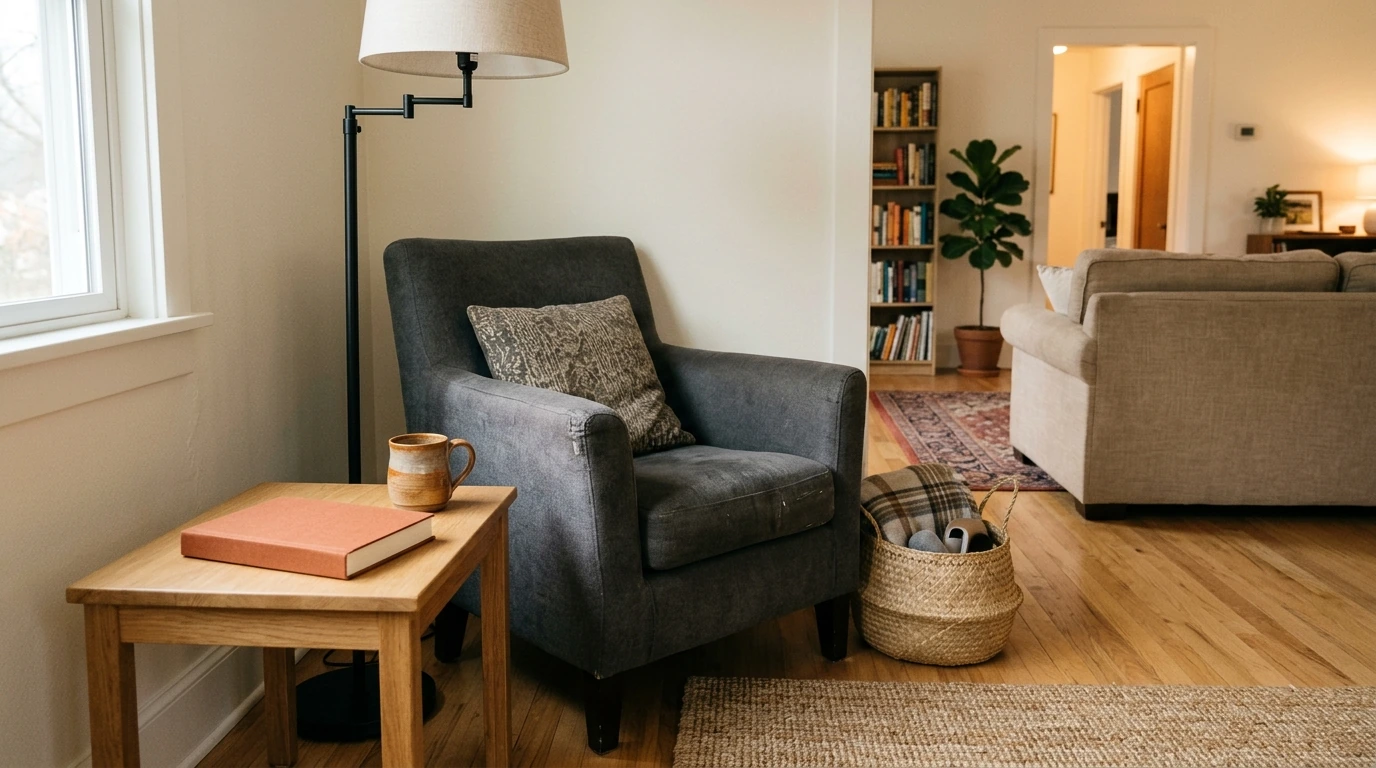
A room of your own does not have to be a separate room. It might be a chair where you read, a desk kept ready for creative work, or a corner where you take a quiet break. What matters is that the activity has a dependable place. We recommend starting with what you already have, noticing what makes the activity difficult, and changing only what you can comfortably maintain.
Start with the purpose, not the furniture
Choose one primary use for the space. “A place to read after dinner” gives you more direction than “a cozy corner”: you need a seat, enough light, and somewhere to put your book. For a hobby, an open work surface and easy access to tools may matter more than the chair.
Pay attention to what interrupts you now. If you spend ten minutes looking for supplies, gather them in one container. If noise is the problem, try a different location or time of day before buying anything. In a shared home, a portable setup can still give your activity a consistent home.
| Your main use | Useful starting point | Keep nearby |
|---|---|---|
| Reading | A comfortable seat with suitable light | Your current book and a place to set it down |
| Creative work | A clear surface you can return to | Frequently used tools in one container |
| Quiet time | A spot with fewer interruptions | Only what helps you settle in |
Give the space a boundary you can maintain
A boundary tells you where the activity starts and where its supplies belong. It could be one shelf beside a chair, a small table, or a basket that holds everything when the dining table needs to serve another purpose. You do not have to keep the entire area untouched between uses; you need a way to make it ready again without much effort.
Leave yourself room to move and work. A surface crowded with decorative objects can make a simple task feel like a setup project. Keep regularly used items within reach and give everything else a nearby home. If you share the space, talk with the people you live with about when it is in use and which items should stay put. A clear, workable agreement is often more useful than an elaborate arrangement.
Make comfort part of the plan
Test the space at the time you expect to use it. Afternoon light may be lovely, while the same chair is too dim for reading in the evening. Move a lamp or change the chair’s position before assuming you need a new fixture. Sit down, reach for what you need, and see whether the setup lets you stay focused without repeatedly getting up.
Comfort also includes temperature and airflow. If a corner feels stuffy or sits directly in a draft, try another position. For practical steps concerning ventilation and other indoor conditions, see the U.S. Environmental Protection Agency’s guide to improving indoor air quality. If your space is for winding down at night, keep it compatible with a calming routine; the CDC’s sleep guidance offers useful context for thinking about your habits and surroundings.
Decide what deserves a place there
Once you know how you will use the area, additions are easier to judge. Our A Room of Your Own listing is one option to consider as part of that plan, not a substitute for making one. Look at its current details and ask whether you have a practical place for it and a reason to use it. If it does not support your chosen activity, leave it off the list.
Smaller additions deserve the same thought. If your quiet-time routine includes serving a drink or snack, our Stainless Steel Serving Set may suit that specific use. If it would simply add another item to store and clean, you can skip it. We want the space to work for you, whether that takes a purchase, a rearrangement, or nothing new at all.
Try the arrangement before adding more
Use the space for a week with the essentials you already own. Notice what you reach for, what gets in the way, and whether the location works at your usual time. A corner that feels peaceful on a weekend morning may be busy on a weekday evening. That is useful information, not a failed attempt.
Make one adjustment at a time so you can tell what helped. Move the chair, relocate your supplies, or clear a little more surface space. Then give the arrangement another try. At the end of each session, take a minute to put tools back and leave the area ready for its next use. The easier it is to return, the more likely this small space is to become a dependable part of your day.
FAQ
Do I need a separate room to create a space of my own?
No. A dedicated corner, desk, shelf, or portable setup can give one activity a dependable place, even in a shared room.
What should I change first if my space feels cluttered?
Decide what the space is for, remove items unrelated to that use, and give frequently used supplies a consistent home.
How can I tell whether an addition is worth buying?
Ask whether it supports your main activity, fits the space you have, and solves a need you noticed while using the area.








Leave a comment