Famous British Boot Brands: A Guide to 10 Names
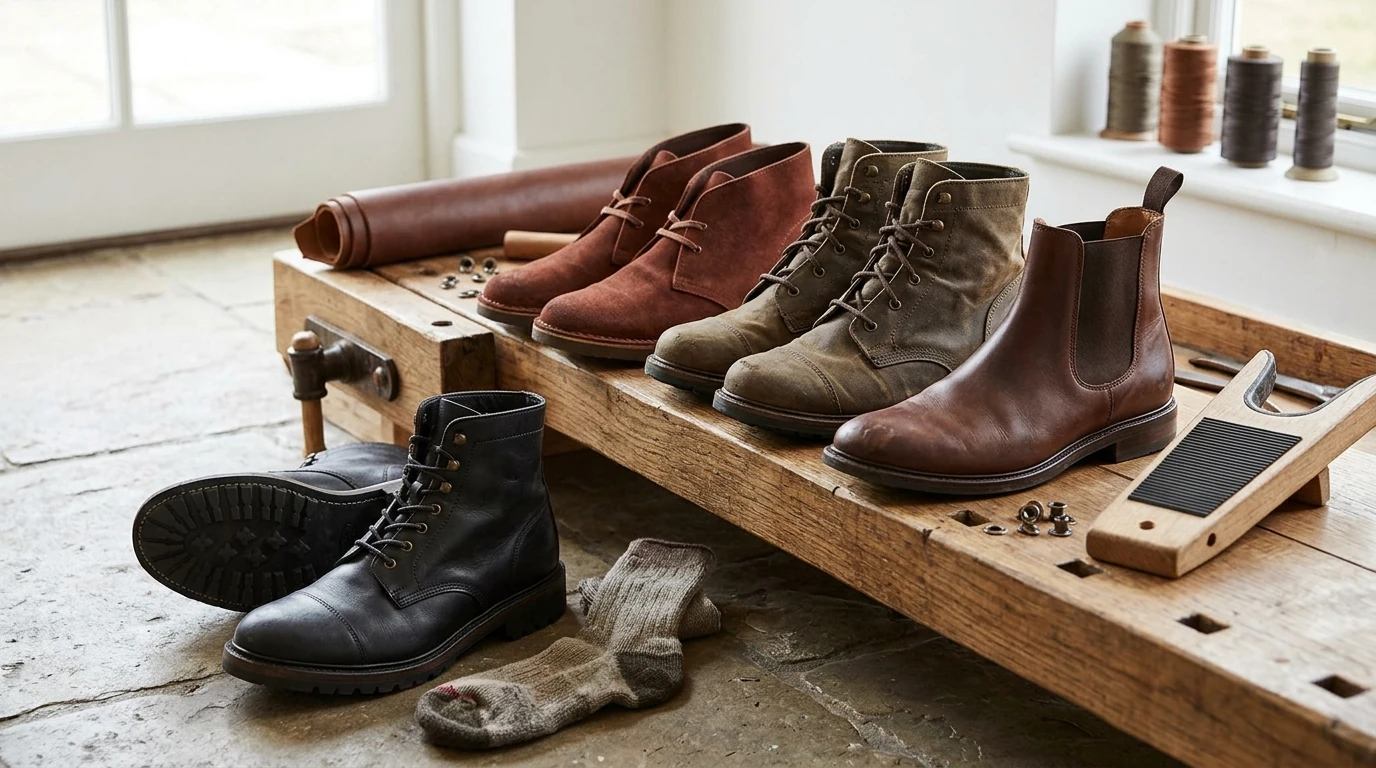
What are some famous British boot brands?
British bootmaking covers everything from sturdy work-inspired footwear to polished dress boots. If you’re deciding where to start, we’d look first at the kind of boot you’ll actually wear: a lace-up for everyday use, a Chelsea boot for easy on-and-off wear, or a refined ankle boot for dressier outfits. These well-known names offer distinct starting points.
Everyday and work-inspired boots
Dr. Martens is known for its recognizable lace-up boots and substantial soles. Solovair is another name to know if you like a similarly sturdy look; its boots are made in Northamptonshire. For a more understated everyday option, Grenson offers leather boots that can work with jeans or tailored casual clothing.
Traditional shoemakers
Tricker’s is especially associated with robust country footwear, including brogue boots. Crockett & Jones, Cheaney, Loake, Church’s, and Barker are established British shoemaking names worth exploring if you prefer a cleaner leather boot. Their ranges vary, so focus on the shape, sole, and leather of a particular pair rather than assuming every boot from one brand will feel or wear alike.
Weather-ready styles
Hunter is a familiar name for rubber Wellington boots. Choose that route when wet ground and mud are the priority, rather than treating a leather fashion boot as rain gear. Rubber boots and leather ankle boots serve different purposes, even when both have a place in your wardrobe.
When comparing leather boots, pay attention to where the upper bends across your foot and whether your toes have room without sliding forward. A little heel movement in a new, stiff leather boot may settle as it flexes, but pinching or sharp pressure is not something to plan around. For care, brush away grit, let damp leather dry away from direct heat, and use a conditioner suited to the leather’s finish.
We’d choose the brand after choosing the job: traction and durability for frequent walking, a sleeker profile for smart outfits, or rubber construction for muddy conditions. If you’re drawn to older British ankle-boot styles, our guide to vintage British tooling ankle boots offers more help with fit, styling, and care.
FAQ
How should leather boots fit at the heel?
Your heel should feel secure without painful rubbing. Slight movement can be normal in a new stiff boot, but your foot should not lift dramatically or slide forward as you walk.










Leave a comment