Healthy Weight Gain Checklist: Calm Calories + Strength
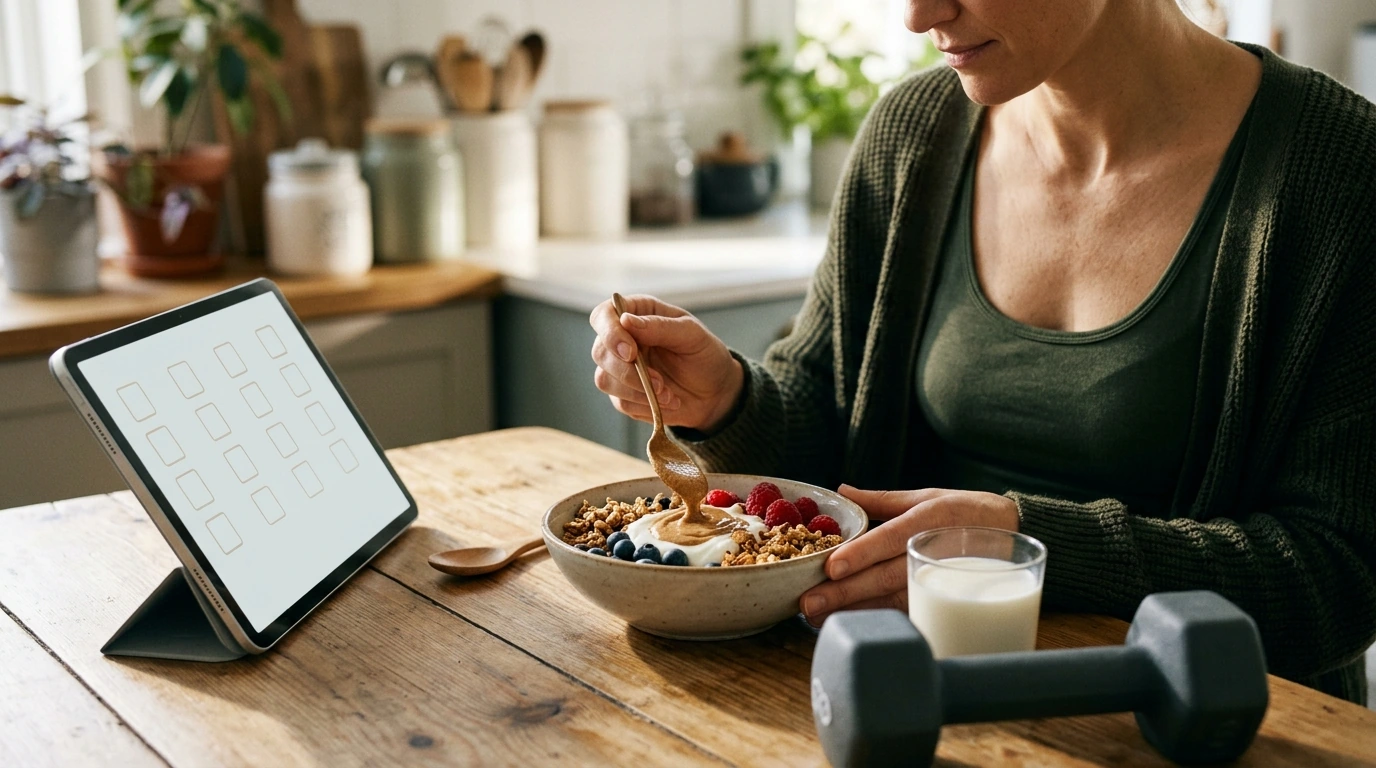
The Feel-Good Approach to Healthy Weight Gain
Weight gain can feel confusing when the goal isn’t “eat anything,” but “feel better, get stronger, and add weight on purpose.” Our team created a simple, repeatable rhythm you can follow: steady calories, strength-building training, and recovery that keeps your digestion and energy in a good place.
If you want a ready-to-use structure you can start today, The Feel-Good Weight Gain Checklist (Digital Download) is designed for daily follow-through and weekly adjustments—without turning meals and workouts into chaos.
What “feel-good” weight gain looks like (and what it doesn’t)
Feel-good weight gain is intentional. You’re building a small, consistent calorie surplus and pairing it with training that tells your body to use that energy to build strength and muscle.
- A steady surplus: enough extra energy to gain, not so much that your sleep, digestion, or training quality falls apart.
- Strength first: lifting that signals muscle growth, supported by food and recovery.
- Food that sits well: repeatable meals and snacks that are calorie-dense without leaving you uncomfortably full all day.
- Measurable progress: simple tracking for body weight trends, gym performance, appetite, and energy.
- Not a “dirty bulk” mindset: nutrient-rich staples first, with room for enjoyable extras that help you stay consistent.
How to use the checklist: daily wins, weekly adjustments
Consistency is the skill. The checklist is meant to be used like a weekly routine: follow the basics daily, then adjust one lever at a time during your weekly check-in.
- Run a baseline week: follow the checklist for 7 days before changing your plan.
- Choose a tracking method you’ll actually use (notes app, printed sheet, or a simple habit tracker).
- Focus on daily essentials: meals/snacks, hydration, training, steps, sleep, and stress support.
- Do a weekly review: check weight trend, training performance, and appetite—then change one thing.
- Prioritize repeatability over perfection: one “off” day doesn’t matter as much as the pattern.
Weekly check-in: what to track and what to tweak
| Weekly signal | If it’s going well | If it’s not moving | One simple adjustment |
|---|---|---|---|
| Scale weight trend (weekly average) | Slow, steady increase | Flat for 2+ weeks | Add 150–300 calories/day |
| Strength in key lifts | Reps/weight gradually rising | Stalled or dropping | Improve recovery (sleep/food) before adding volume |
| Appetite and digestion | Mostly comfortable | Too full/bloated | Shift calories to liquids or smaller, denser meals |
| Energy and mood | Stable, upbeat | Sluggish/irritable | Improve meal timing and add carbs around training |
Calories made practical: eat more without feeling miserable
The easiest surplus is the one that doesn’t feel like a second job. Instead of forcing huge portions, stack small upgrades that add up.
If you want the process to stay calm, use tools that reduce friction: a printed checklist you can mark daily and a simple weekly review you can finish in five minutes.
Macros without obsession: protein, carbs, and fats for strength
- Protein: supports muscle gain; spread it across meals so each meal contributes to muscle-building signals. For basic protein guidance, see NIH MedlinePlus: Protein in diet.
- Carbs: often improve training performance, recovery, and appetite.
- Fats: make it easier to hit higher calories without a huge increase in food volume.
- Simple plate: include a protein + carb + fat, plus fruit/veg when possible.
- Easy timing rule: add carbs around training; add fats to meals away from training if your digestion is sensitive.
For a deeper, research-backed look at how protein and exercise work together, you can also review the International Society of Sports Nutrition position stand on protein and exercise.
Strength-building habits: training that earns the weight gain
For simple at-home core and trunk work that supports heavier lifting over time, our team likes pairing the checklist with the Abdominal Wheel for Strengthening Muscles. It’s an easy way to build a small, repeatable strength habit on non-gym days.
To align training volume with general health guidelines, you can also reference CDC guidance on how much physical activity adults need.
Recovery that keeps gains “feel-good”: sleep, stress, digestion
What’s inside the digital download (and how to make it stick)
The Feel-Good Weight Gain Checklist (Digital Download) is built to keep you moving forward when motivation is inconsistent. You get a clear daily flow plus a weekly review so you can adjust without overcorrecting.
If meal prep helps you stay consistent, a small practical add-on can make the process smoother. Our team often uses a dedicated serving setup for quick portioning at home, like the Stainless Steel Serving Set, to make “default meals” easier to assemble without overthinking.
FAQ
How quickly should weight go up for healthy weight gain?
Aim for a slow, steady increase and judge it by weekly averages rather than daily scale swings. If your weekly average hasn’t moved for about two weeks, a small calorie bump is usually enough. Strength progress and recovery should improve alongside the scale.
What if appetite is low and it’s hard to eat more?
Use liquid calories (smoothies, milk-based shakes, drinkable yogurt), smaller frequent meals, and calorie-dense add-ons like nut butter or olive oil. Increase calories gradually so your digestion can adapt. A consistent snack window can also help when hunger cues are unreliable.
Do carbs matter for strength and weight gain, or is protein the main thing?
Protein supports muscle repair and growth, but carbs often drive better training output and recovery, which helps you gain more effectively. A simple approach is protein at each meal, carbs around workouts, and fats added to meals that need extra calories. You don’t need perfect macros—just steady building blocks.












Leave a comment