CrossFit Workouts Guide: Scale, Progress & Train Smarter
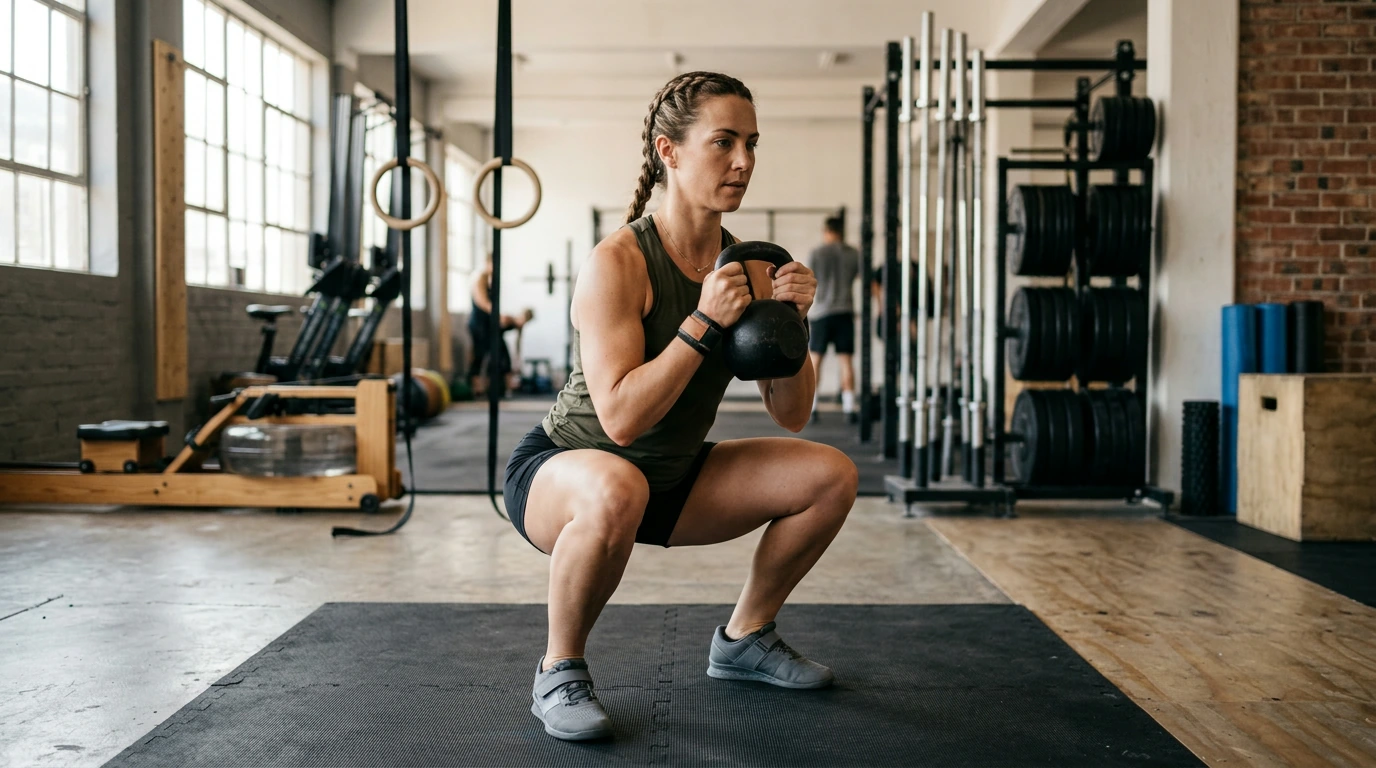
Unleash Your Inner Athlete with CrossFit Workouts: A Practical Guide for Beginners to Advanced Athletes
CrossFit works best when training feels structured, scalable, and repeatable—whether your goal is finishing your first WOD with confidence or pushing intensity with smarter pacing. Our team uses a simple path: master the movements that matter most, scale without losing the training effect, rotate ready-to-run workouts for your level, and follow weekly templates that keep results moving without burning out. For more guidance, see Workout Pacing Predictors of Crossfit® Open Performance.
Start with the CrossFit fundamentals that drive progress
Progress in CrossFit is rarely about doing more random work—it’s about doing the right work well, then gradually doing it faster or heavier. Before you chase intensity, prioritize movement quality: full range of motion you can control, a stable midline (bracing), and consistent positions under fatigue. For further reading, see The influence of sex-division, experience, and pacing ….
- Build your base patterns: squat, hinge, press, pull, carry, and core stabilization.
- Treat conditioning as a skill: pacing, breathing, and transitions are trainable.
- Use benchmarks: track time, rounds, reps, and loads, then repeat periodically.
- Keep sessions balanced: warm-up → strength/skill → WOD → quick cooldown.
Movement Pattern Checklist and Beginner-Friendly Scaling Options
| Pattern | Common CrossFit Moves | Beginner Scaling | Progression Target |
|---|---|---|---|
| Squat | Air squat, front squat, thruster | Box squat, reduce depth, lighter DB/KB | Full-depth squats with stable knees/torso |
| Hinge | Deadlift, kettlebell swing | Romanian deadlift, lighter swing to eye level | Neutral spine under load; hip-driven swing |
| Press | Push press, strict press, handstand push-up | Seated DB press, pike push-up, reduced load | Strict control overhead; efficient dip-drive |
| Pull | Pull-up, toes-to-bar, rowing | Ring rows, banded pull-ups, knee raises | Strict pulling strength; controlled kip later |
| Carry/Core | Farmer carry, planks, GHD sit-up | Light carries, dead bug, hollow holds | Midline endurance without back discomfort |
How to scale workouts without losing the training effect
Scaling isn’t “making it easy”—it’s keeping the stimulus while protecting technique. When reps get sloppy, you’re no longer training the intended pattern; you’re practicing breakdown.
- Scale in this order: range of motion → load → volume → speed.
- Use pacing targets: for 12–20 minutes, stay at a conversation pace; for 6–10 minutes, go hard but controlled.
- Set time caps: finish with good reps left, not messy reps added.
- Gymnastics rule: keep sets submaximal; stop before failure to build skill safely.
- Joint-friendly swaps: box jumps/running → step-ups/bike/row when impact is the limiter.
For strength progressions and sensible overload, we align with established guidance like the ACSM progression models and the NSCA resistance training position statement.
Beginner WODs that build confidence and consistency
These sessions are designed to feel repeatable. Your job is to move well, choose smart scales, and finish feeling like you could do a little more.
- WOD 1 (8–12 min): 10-9-8-7-6-5 reps of goblet squat + push-ups (scale to incline) + ring rows. Keep rests short and form steady.
- WOD 2 (12–15 min AMRAP): 200m row (or 1 min bike) + 10 kettlebell deadlifts + 10 sit-ups (or dead bug). Aim for smooth transitions.
- WOD 3 (For time, cap 12 min): 30 wall balls (or DB thrusters) + 30 box step-ups + 30 DB hang power cleans (light). Break early, not late.
Technique focus tip: pick one movement each session to “win” (best squat positions, best hinge bracing, best pulling mechanics), then let conditioning follow.
Intermediate to advanced workouts: intensity with intent
Once you can scale quickly and maintain positions under fatigue, intensity becomes more productive—and more measurable.
- WOD A (Intervals): Every 3 minutes x 5 rounds—12/10 cal row + 8 burpees over line + 6 front squats (moderate). Goal: repeatable round times.
- WOD B (Chipper, cap 20 min): 50 double-unders (or 100 singles) + 40 KB swings + 30 toes-to-bar (or knee raises) + 20 overhead presses + 10 bar-facing burpees. Pace the early volume.
- WOD C (Strength + sprint finisher): 5×3 deadlift (build) then 6-minute AMRAP of 6 power cleans (light/moderate) + 12 box jumps/step-ups. Stay fast and clean.
Advanced progression rule: increase difficulty one variable at a time (heavier load or more reps or harder skill), not all at once.
Simple weekly templates that keep training sustainable
Consistency beats hero workouts. Your week should balance strength exposure, conditioning variety, and recovery.
Gear that supports better training (without overcomplicating it)
- Unleash Your Inner Athlete with CrossFit Workouts | Ultimate Guide to the Best CrossFit Workouts for Beginners & Advanced Athletes: our team’s favorite option when you want a ready-to-use structure that makes progression and scaling decisions simple.
- Abdominal Wheel for Strengthening Muscles: a fast way to add bracing and anti-extension work after a WOD (or on non-WOD days) without needing a full accessory circuit.
- Adidas Women’s White Faux Leather Sneakers: a stable everyday trainer option for lighter sessions and general wear when you prefer a supportive, less “squishy” feel underfoot.
FAQ
How many days per week should a beginner do CrossFit workouts?
Start with 3 days per week (for example, Monday/Wednesday/Friday) so you can recover and keep movement quality high. After 3–6 weeks, add a 4th day only if soreness is manageable and your sleep and energy stay steady.
What is the safest way to scale CrossFit workouts?
Scale range of motion first, then load, then volume, then speed so you protect technique and joint positions. Use time caps to avoid sloppy reps, swap high-impact moves for low-impact options when needed, and stop gymnastics sets before failure.
Can CrossFit workouts build muscle and endurance at the same time?
Yes—when your week includes dedicated strength/skill work plus conditioning with varied time domains. Build muscle with progressive loading on squats, presses, and hinges, and build endurance by controlling pace in 12–20 minute WODs while supporting it with enough protein and recovery.








Leave a comment