Long Resistance Loop Band Workout: Train Anywhere in 20 Min
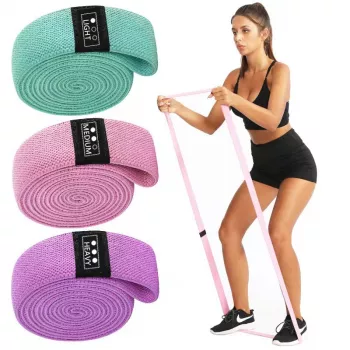
Long Resistance Loop Band: Simple Strength Training Anywhere
A long resistance loop band is one of the easiest ways to add strength work to real life—home workouts, warm-ups before a run, quick mobility between meetings, or travel days when a gym isn’t happening. With our Long Resistance Loop Band, you can keep training flexible: loop it around a sturdy anchor point, step into it for lower-body work, or use it for assisted pulls and rows. The goal stays simple—better movement, stronger muscles, and more consistent training with minimal setup.
If you’re building a small home setup, a long loop band also pairs well with compact tools like our Abdominal Wheel for Strengthening Muscles—the band helps you warm up and activate, while the wheel challenges your trunk strength and control.
What a long loop band is best for
Long loop bands earn their keep because they cover a lot of training “bases” without taking over your space. Here are the most practical ways to use one:
- Full-body strength without machines: presses, rows, hinges, squats, and carries (anchored or stepped-on).
- Glute and leg work with more range than mini bands: lateral walks, kickbacks, squats, and deadlift patterns.
- Upper-body training that fits small spaces: band rows, face pulls, pull-aparts, triceps pressdowns, and curls.
- Warm-ups and activation: shoulders, hips, and core engagement before lifting or sports sessions.
- Assisted strength practice: reduce load during pull-ups or groove movement patterns with control.
- Mobility and stretching support: gentle band-assisted hamstring, hip flexor, and shoulder stretches (keep tension light and steady).
How to use it safely and get better results
Resistance bands can be incredibly joint-friendly, but they demand respect—tension rises the farther the band stretches. Our team recommends these basics to keep sessions productive and predictable:
- Choose a stable setup: if anchoring, confirm the anchor point is solid and the band path is clear—no sharp edges or door gaps that can pinch.
- Check the band before each session: look for tears, thinning spots, or sticky/overstretched areas; replace if damaged.
- Control the return: move smoothly and keep joints aligned so the band doesn’t “snap” you back into position.
- Match resistance to the goal: higher tension for low-rep strength work, lighter tension for higher-rep burnouts, warm-ups, and mobility.
- Use consistent tempo: 2 seconds out / 2 seconds back is a reliable baseline; pause briefly at peak tension for added control.
- Progression that works: add reps first, then add sets, then increase tension (or step farther from the anchor to increase stretch).
For training structure and progression guidelines that translate well to band training, you can also reference the American College of Sports Medicine’s position stand on resistance training progression and Mayo Clinic’s overview of strength training fundamentals.
A quick routine (15–20 minutes) with one long loop band
If you want a simple template you can repeat a few times per week, this is a solid starting point. Keep your reps smooth, stop a set when form starts to fade, and adjust tension by stepping closer or farther from the anchor.
Workout outline
Sample movements and simple setup cues
| Movement | Setup | Focus cue |
|---|---|---|
| Band Row | Anchor at chest height or loop around a sturdy post | Pull elbows back, ribs down, avoid shrugging |
| Squat to Press | Stand on band, hold ends at shoulders | Drive through mid-foot, press overhead without arching low back |
| Romanian Deadlift | Stand on band, hold ends, soft knees | Hips back, spine long, feel hamstrings load |
| Lateral Walk | Loop band around legs (above knees or ankles) | Small steps, knees track over toes, hips level |
| Pallof Press | Anchor at chest height, stand sideways | Brace core, press straight out, resist rotation |
Where this band fits in a home gym
- Pairs well with bodyweight training: use it to make basics harder (more tension) or easier (assistance).
- Complements core tools: add band anti-rotation work on the same days you use an ab wheel for better trunk stability.
- Easy to store and travel with: keep it in a drawer, gym bag, or suitcase so workouts don’t depend on equipment access.
- Useful for “between sets” mobility: shoulder pull-aparts, hip openers, and gentle stretches without leaving the room.
- Budget-friendly upgrade: add variety to a routine without investing in multiple machines or heavy weights.
Simple care tips to help it last
Recommended gear from our team
- Long Resistance Loop Band — a simple, packable way to train your full body with anchored, stepped-on, and assisted movements.
- Abdominal Wheel for Strengthening Muscles — a compact add-on for focused trunk strength work when you’re ready to level up control.
FAQ
Is a long loop band good for beginners?
Yes—start with lighter tension and prioritize control. Keep your posture stable, use smooth reps, and shorten the range of motion until the movement pattern feels consistent.
How is a long resistance loop band different from a mini band?
A long loop band supports larger movement patterns like rows, presses, hinges, and assisted pull-ups with a longer working range. Mini bands are typically better for hip/glute activation drills and short-step lateral work.
How often can the band be used each week?
For general strength and mobility, 2–4 sessions per week works well. Rotate harder workouts with lighter technique, warm-up, or mobility-focused days to stay fresh.











Leave a comment